
Plantar Fasciitis Rehab: Moving Beyond Cortisone Shots and Rest
The first step out of bed in the morning tells the entire story. For anyone dealing with plantar fasciitis, that initial contact with the bedroom floor feels less like walking and more like driving a hot nail directly into the center of the heel. The tissue feels stiff, brittle, and agonizingly tight. After ten or fifteen minutes of limping around the kitchen, the pain often dulls to a manageable, low-grade ache, only to return with a vengeance after sitting through an afternoon meeting or driving home from work.
For decades, the standard medical playbook for this condition has remained remarkably predictable. Patients are told to stay off their feet, apply ice bottles to the heel, take nonsteroidal anti-inflammatory drugs, wear rigid orthotics, and, if the pain persists, submit to a series of cortisone injections.
Yet countless active adults find that months or even years down the road, their heel pain remains stubbornly unresolved. They find themselves caught in an exhausting cycle of temporary relief followed by frustrating relapses the moment they try to resume running, hiking, or simply walking around a grocery store.
The reason for this widespread failure is fundamentally conceptual: standard treatments treat plantar fasciitis as an acute inflammatory injury that needs rest, when it is actually a chronic degenerative condition that desperately needs load. True recovery requires moving past passive fixes and rebuilding the mechanical capacity of the foot.
The Core Misunderstanding: Fasciitis Versus Fasciosis
The medical suffix “-itis” indicates active inflammation. When an ankle is acutely sprained or a bee stings your finger, the immune system rushes white blood cells and fluid to the area, creating redness, heat, and noticeable swelling.
In chronic heel pain, however, tissue samples reveal something entirely different. There is an absence of inflammatory cells. Instead, what specialists see under a microscope is plantar fasciosis: a state of structural collagen breakdown, micro-tearing, disorganized fiber alignment, and poor vascularity.
The plantar fascia is not a delicate muscle; it is a dense, thick band of fibrous connective tissue running from the calcaneus, or heel bone, all the way to the base of the toes. Structurally and functionally, it behaves much like a tendon. When a tendon or fascia is subjected to repetitive mechanical stress that exceeds its capacity to recover, it does not stay permanently inflamed. Instead, it enters a state of failed healing.
When you treat a degenerative tissue problem with rest and anti-inflammatories, you are attempting to extinguish a fire that is not actually burning. Ice and rest may temporarily numb pain signals, but they do nothing to restore the structural integrity of the degraded tissue. In fact, prolonged rest frequently makes the problem worse by deconditioning the surrounding musculature and lowering the tissue’s tolerance for mechanical load.
The Hidden Costs of Cortisone Injections and Total Rest
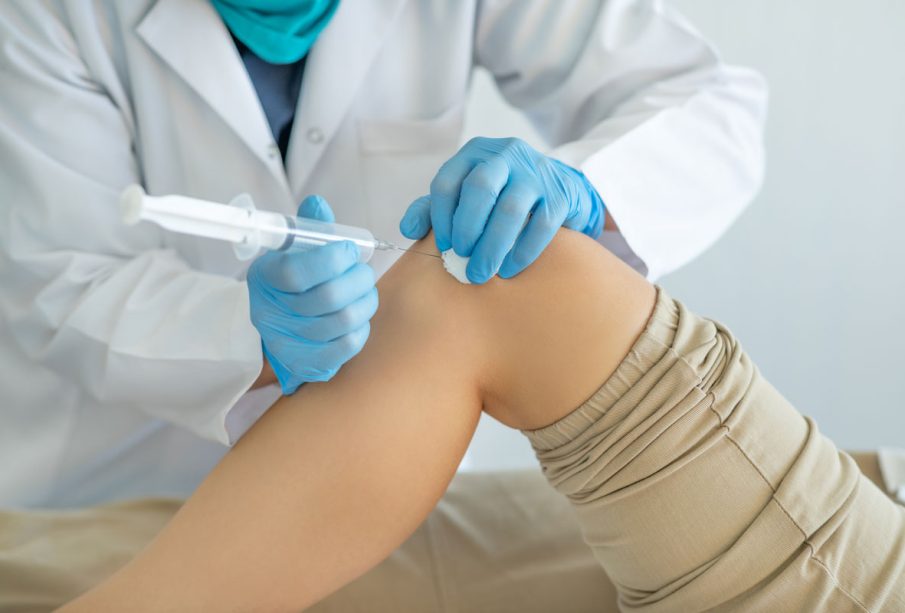
When daily heel pain becomes unbearable, a cortisone injection is often presented as the ultimate clinical intervention. Corticosteroids are undeniably potent anti-inflammatory agents, and they frequently provide dramatic, immediate pain relief that can last for several weeks or months.
However, this relief comes with significant trade-offs that are rarely explained with sufficient candor.
First, cortisone works by suppressing metabolic activity and shutting down local signaling pathways. While this silences pain, it also halts the synthesis of new collagen, weakening the structural matrix of the plantar fascia. Repeated injections carry a documented risk of plantar fascia rupture, a catastrophic tear that can cause permanent biomechanical changes and prolonged disability.
Second, a misplaced or migrating steroid injection can cause atrophy of the subcalcaneal fat pad. The fat pad beneath your heel bone is a specialized, honeycomb-like structure of fibrous chambers filled with fat cells, designed by nature to absorb shock with every step you take. Unlike muscle or surface skin, once this deep fat pad atrophies, it does not regenerate. Losing that natural cushion means walking on hard surfaces will cause direct, unbuffered bone impact for the rest of your life.
Total rest poses an equally insidious trap. When you stop walking, running, or exercising, the plantar fascia experiences an absence of mechanical stress. The connective tissue becomes thinner, less stiff, and less elastic, while the calf muscles and intrinsic foot muscles atrophy. When you finally attempt to return to normal life, your heel now possesses a much lower threshold for load than it had when the injury first began. The pain inevitably flares up again, not because your activity was excessive, but because your foot’s capacity has degraded.
The Loading Paradigm: Mechanotransduction and Tissue Remodeling
If rest weakens tissue, what actually repairs it? The answer lies in a biological process known as mechanotransduction.
Living cells within connective tissue, called fibroblasts, are sensitive to mechanical force. When tensile stress is deliberately applied to connective tissue through controlled exercise, these cells detect the strain and convert that physical signal into a biochemical cascade. They produce collagen, align new fibers parallel to the direction of force, and increase the tensile stiffness of the tissue.
To heal a degenerated plantar fascia, you must subject it to heavy, controlled tension. This is the cornerstone of modern progressive rehabilitation. Rather than avoiding movement, you actively introduce specific loads that stimulate the fascia to remodel into a stronger, thicker, and more resilient band.
Engaging the Windlass Mechanism
The most effective way to load the plantar fascia relies on a natural biomechanical feature called the windlass mechanism.
When your big toe dorsiflexes, or bends upward toward your shin, it acts like a winch, winding the plantar fascia around the head of the metatarsal bone. This action tightens the fascia, packs the bones of the midfoot together, and transforms the foot into a rigid, powerful lever for propelling you forward.
By loading the foot while the big toe is fully extended, you place maximum tensile stretch directly across the plantar fascia. This can be accomplished through modified heel raises:
-
Stand with the balls of your feet on the edge of a sturdy step.
-
Place a rolled-up bath towel or a firm foam wedge beneath your toes, especially the big toe, so they are bent upward throughout the exercise.
-
Take three full seconds to rise up onto your tiptoes.
-
Hold the peak contraction at the top for two full seconds.
-
Take three full seconds to lower your heels down below the level of the step into a deep, controlled stretch.
Performing this exercise slowly with a heavy, controlled cadence stimulates collagen synthesis without creating the high-velocity impact forces that aggravate irritable tissues. Over several weeks, the resistance can be progressively increased by wearing a weighted backpack or holding a dumbbell.
Rebuilding the Kinetic Chain: Calves, Ankles, and the Foot Core
The plantar fascia does not exist in isolation. It is the anatomical extension of an integrated posterior chain that begins in the hips, runs down through the hamstrings, and continues into the calf complex.
The Achilles tendon and the plantar fascia are intimately connected at the heel bone; in fact, fibers from the Achilles blend directly into the paratenon of the plantar fascia, especially in younger adults. If your calf muscles are chronically stiff or weak, every stride forces the foot to absorb an excessive amount of mechanical work.
The Soleus: The Overlooked Shock Absorber
Most calf rehabilitation focuses on the gastrocnemius, the large, visible muscle on the back of the lower leg. However, the deeper calf muscle, the soleus, is often the true culprit in persistent heel pain.
The soleus crosses only the ankle joint, meaning it must be trained with the knee bent. During running, the soleus experiences forces between six and eight times your body weight, acting as the primary muscular engine that controls the forward movement of the shin over the foot.
If the soleus lacks strength, the ankle collapses prematurely into dorsiflexion, transferring massive, unbuffered tensile strain straight into the plantar fascia. Incorporating heavy, seated calf raises with the knees bent at ninety degrees restores this vital shock-absorbing capacity.
Restoring Ankle Mobility
A lack of ankle dorsiflexion—the ability to bend the ankle so the toes move toward the knee—is one of the most reliable predictors of plantar fasciitis.
When the talocrural joint is stiff, your body will instinctively search for compensatory motion elsewhere. As your shin moves forward over your foot during a normal step, a restricted ankle forces the foot to excessively pronate, collapsing the medial longitudinal arch to cheat its way through the stride. This violent inward roll repeatedly overstretches the plantar fascia at its calcaneal insertion point.
Improving ankle dorsiflexion through targeted mobility drills, soft-tissue work on the posterior compartment, and joint mobilizations immediately relieves this downstream torsional stress.
Strengthening the Foot Core
Just as the spine depends on deep abdominal muscles for dynamic stability, the arch of the foot depends on the intrinsic foot muscles. Small muscles like the abductor hallucis, flexor digitorum brevis, and quadratus plantae form a muscular sling that works in tandem with the plantar fascia to support the arch.
Decades of wearing stiff, narrow, cushioned modern footwear have left many adults with weak, deconditioned foot intrinsics. When these muscles fail to fire, the plantar fascia is forced to bear the entire structural burden alone.
Practicing exercises like the “short foot” or foot doming—where you draw the ball of the big toe straight back toward your heel without curling your toes—wakes up these dormant stabilizers, distributing ground reaction forces across active muscular tissue rather than passive connective bands.
The Practical Three-Phase Rehab Framework
Rehabilitating the plantar fascia requires a structured, patient progression that respects tissue biology. Rushing into high-impact activities before the fascia has developed tensile capacity will trigger setbacks.
Phase 1: Calming Irritability and Isometric Loading
The priority in the early phase is reducing acute morning pain while introducing safe mechanical stress:
-
Isometric Heel Holds: Stand on flat ground and rise halfway onto your toes, holding that static position for thirty to forty-five seconds. Repeat this four to five times. Isometric contractions produce an analgesic, pain-relieving effect in tendon and fascial tissue without the friction of repeated movement.
-
Non-Aggressive Soft Tissue Mobilization: Roll the sole of the foot gently over a smooth lacrosse ball or firm cork ball for two minutes before getting out of bed. The goal is not to aggressively mash the tissue, but to stimulate local mechanoreceptors, desensitize the nervous system, and improve tissue glide before bearing weight.
-
Toe Extension Stretches: Manually pull the big toe back toward the shin for thirty seconds at a time to mobilize the windlass mechanism without body weight.
Phase 2: Heavy Slow Resistance and Progressive Strength
Once morning pain transitions from a sharp stabbing sensation to a mild stiffness, progress to active tissue remodeling:
-
Deficit Heel Raises with Towel Roll: Perform the slow, three-seconds-up, three-seconds-down heel raises over a step with the toes elevated, three days per week. Start with body weight and gradually add load.
-
Seated Bent-Knee Calf Raises: Build dedicated soleus strength using a seated machine or heavy weights placed across the knees.
-
Foot Doming: Perform three sets of ten deliberate arch contractions daily while sitting, progressing to standing on both feet, and eventually standing on a single leg.
Phase 3: Energy Storage and Return
The plantar fascia functions as a biological spring. It compresses upon impact, stores elastic strain energy, and recoils to propel you forward. Before returning to sports, running, or demanding hikes, your foot must regain this spring-like capacity:
-
Low-Amplitude Pogo Hops: Gentle, rhythmic hopping in place with relatively stiff ankles, teaching the Achilles and plantar fascia to work together as a dynamic elastic unit.
-
Walking Intervals: Gradually introducing controlled walking volume on natural, varied terrain before returning to pavement.
-
Graduated Return to Impact: Reintroducing running or dynamic athletics using structured run-walk intervals, monitoring tissue response meticulously.
The Twenty-Four-Hour Response Rule
Navigating recovery requires a dependable metric to ensure you are applying the right amount of load. Pain during exercise is not always an indicator of damage, but your symptoms the next morning provide an undeniable assessment of tissue tolerance.
Adopt the twenty-four-hour rule:
-
You may experience mild, tolerable discomfort (around a three out of ten) while performing loading exercises.
-
If that discomfort returns to baseline within an hour after your session, the mechanical load was appropriate.
-
The ultimate test occurs the following morning. If your first morning steps feel no worse, or feel easier than the day before, your plantar fascia handled the training volume successfully.
-
If your morning pain is noticeably sharper, stiffer, or takes longer to warm up, you exceeded the current capacity of your tissue. Do not panic, but reduce the weight, repetitions, or walking volume by twenty to thirty percent for your next session.
This feedback loop eliminates guesswork and allows you to systematically rebuild your foot without triggering chronic flare-ups.
Footwear, Orthotics, and Transition Strategies
Footwear plays a vital role in recovery, but its purpose is frequently misunderstood.
Rigid orthotics, deep heel cups, and motion-control shoes are valuable therapeutic tools during the acute, hyper-irritable phase. They act like a structural cast, shifting stress away from the insertion of the plantar fascia and calming irritated nerves.
However, an orthotic should rarely be treated as a permanent life sentence. Wearing a rigid, supportive arch support indefinitely prevents the foot from flexing, adapting, and utilizing its intrinsic strength. Once tissue tolerance has improved through progressive loading, many individuals can gradually taper off custom orthotics in favor of more flexible footwear.
Look for shoes that feature:
-
A wide, anatomical toe box: Shoes that taper at the toes cramp the big toe inward into a hallux valgus position. This compresses the lateral plantar artery and restricts blood flow directly to the plantar fascia. A wide toe box allows the big toe to splay naturally, engaging the abductor hallucis muscle and maximizing mechanical stability.
-
A moderate heel-to-toe drop during rehab: Transitioning suddenly to completely flat or minimalist shoes while dealing with active plantar fasciitis dramatically spikes tension on the Achilles and heel. Maintain a moderate drop during rehabilitation, and lower it gradually only after the tissue has fully adapted.
Reclaiming Long-Term Foot Health
Plantar fasciitis is not a random curse, nor is it an inevitable penalty for getting older or being on your feet. It is a biological adaptation to a fundamental imbalance between the mechanical stresses placed on the foot and the tissue’s physical capacity to handle that stress.
Passive treatments like cortisone shots, custom braces, and endless rest may offer fleeting windows of relief, but they leave the underlying structural deficit entirely unaddressed.
By understanding your foot as a dynamic, adaptable mechanical system, loading the tissue intentionally, restoring the kinetic chain of the lower leg, and rebuilding your natural arch capacity, you can step out of bed each morning without hesitation, knowing your feet are strong, resilient, and built to carry you wherever you want to go.